|
|
|
|
|
|
Category: Uncategorized

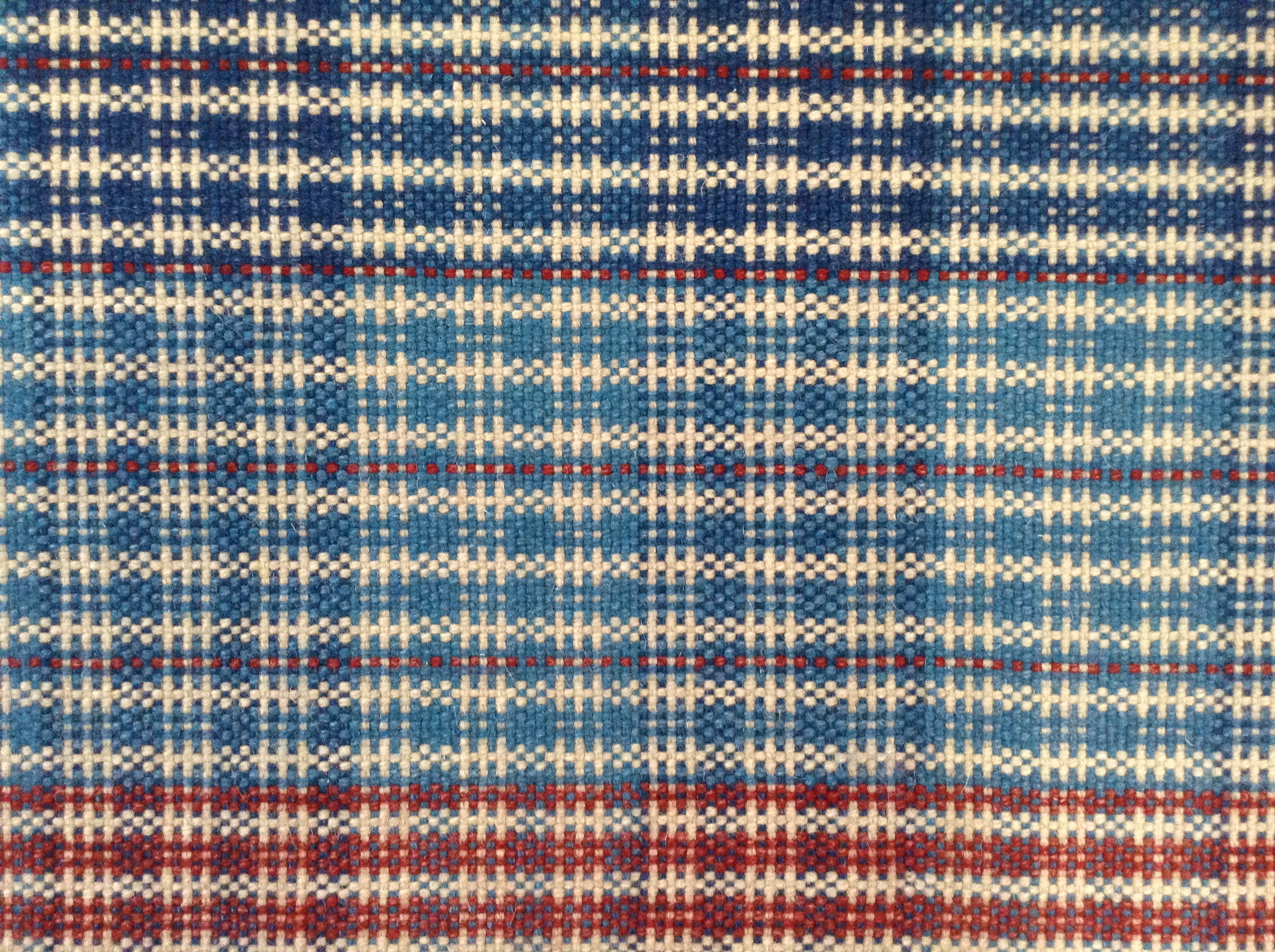
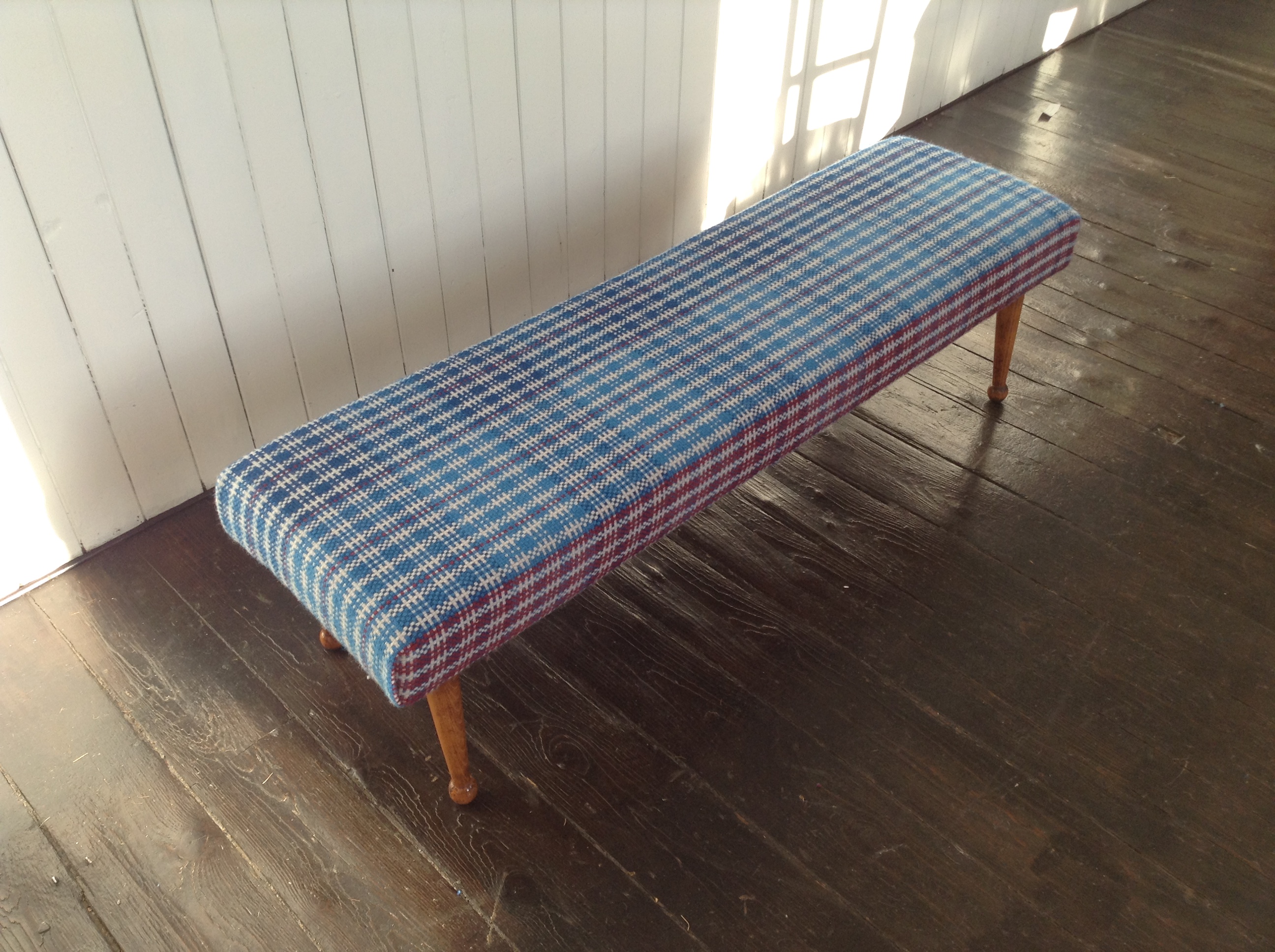
Sampling with yarn from Cambrian Mountains Wool Challenge
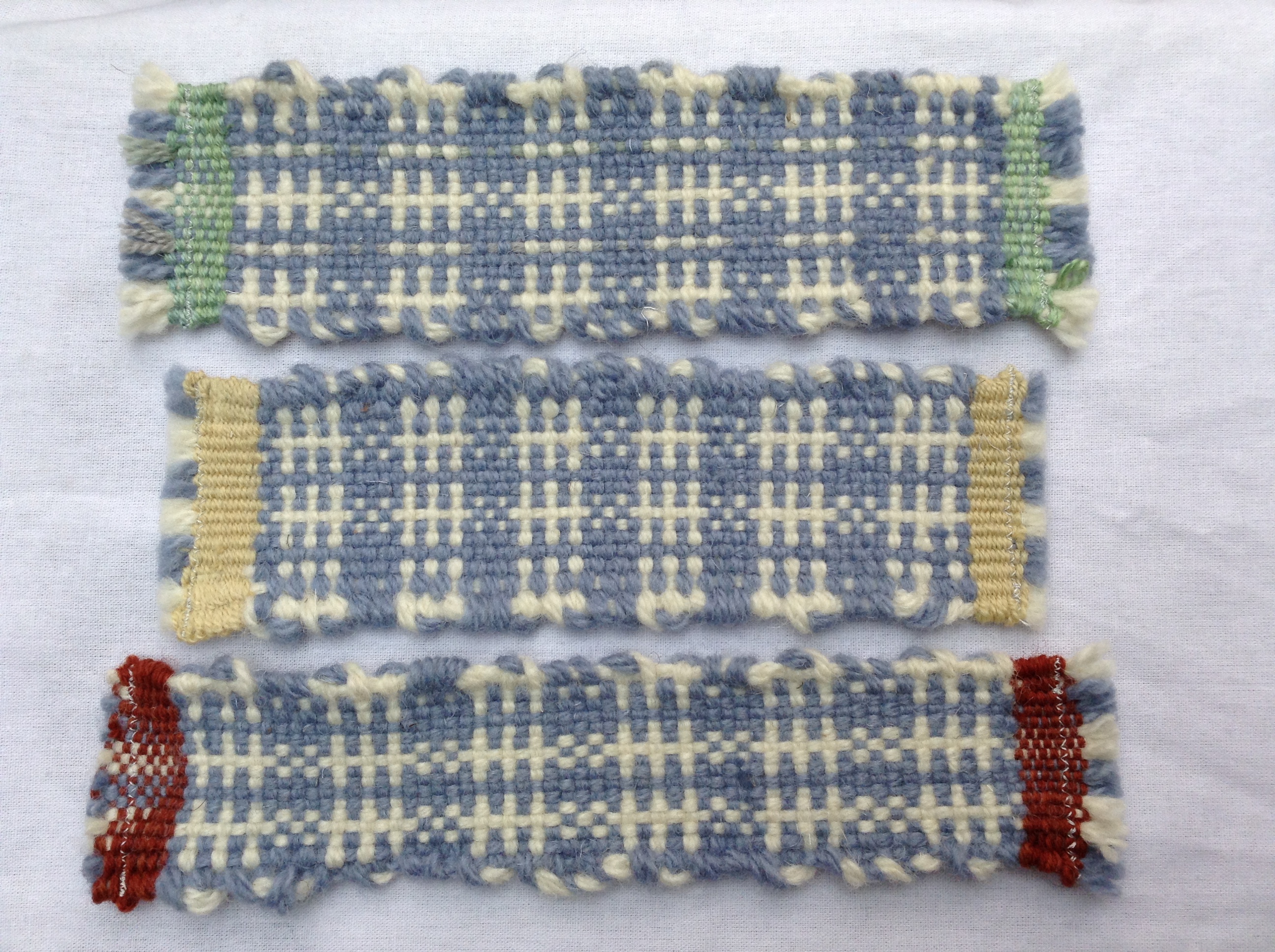
I received my yarn on cones, wound it onto hanks and sent it off to Triskelion to be dyed. I kept back a tiny amount, dyed half with some odd blue dye and did this sampling. I made adjustments to the pattern and tried different setts to produce a good upholstery cloth weight.
I then sent a test piece to Mick Sheridan of M.S. Upholstery for his OK. The plan is for him to use the final fabric to upholster a bench, which will be our collaborative piece for the collection.
Inclusion in the OneWool Online Gallery
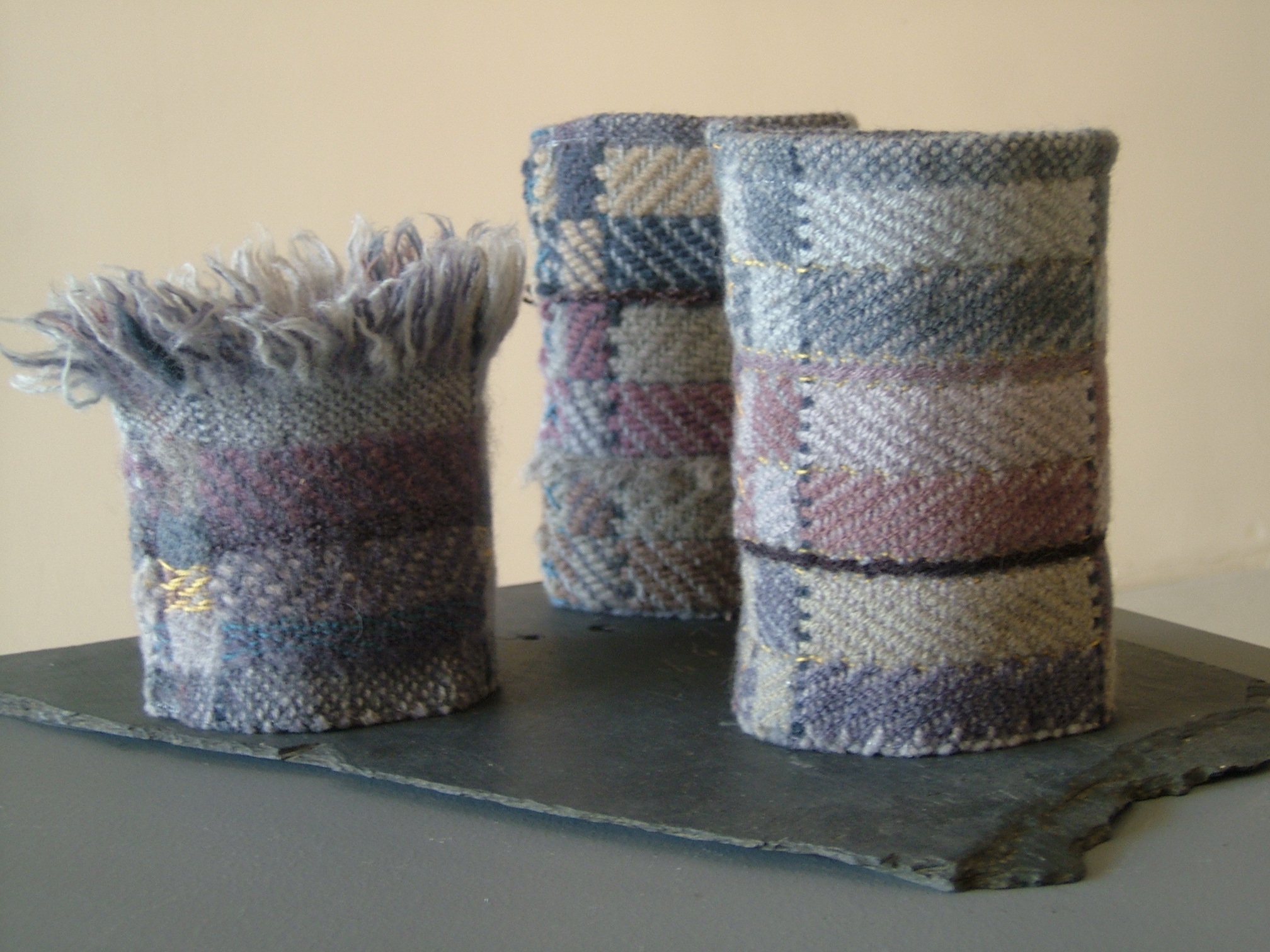
This trio of woven pieces, has been successfully nominated for the Campaign for Wool’s online gallery. They are made from British Wool, dyed with natural dyes inspired by the colours of Welsh slate. The weave structure is two layer double-cloth and they have been subjected to ‘controlled’ felting. They were exhibited in conjunction with the International Felt Makers Conference held in Bath.
Cambrian Mountains Wool Design and Make Challenge 2015
I have been selected as one of the 25 designer/makers for this fantastic opportunity to showcase the use of Welsh Wool. Specially commissioned wool fabric, yarn and ‘tops’ are supplied to participants to produce woven, knitted or felted ‘products’.
Design development for ‘degree show’ project
I am aiming to design and weave the largest piece of cloth I have attempted. Each warp end and weft pick is 3 strands of woollen yarn. Tension is a challenge as I am using 3 different yarns, each with its own ‘character’ as well as colour.

Sampling for flooring weight woven cloth

Warp number 2 in this project. Using multiple strands as one end (warp thread) and as one pick (weft pass).
I used 3 strands instead of one thicker one, all going through one heddle and in one dent in the reed. Although the white yarn appeared quite fluffy, it wove without problem to my relief. For a single cloth (as opposed to double-cloth) it was interesting to observe the different feel of the various weave structures; the hopsack giving a thicker and more robust cloth.
The relationship between the thickness of the weft and coverage of the warp.
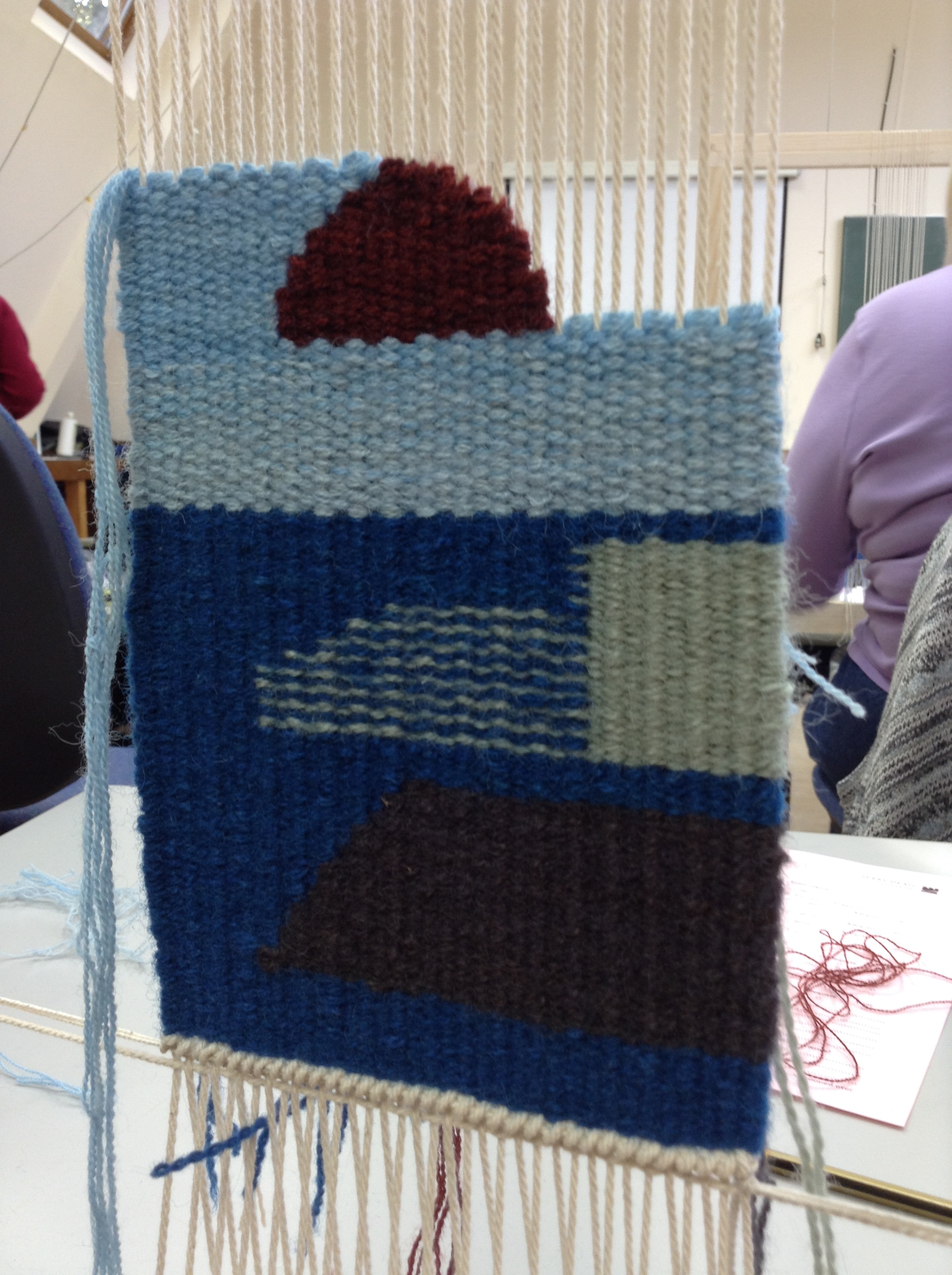
My application for a bursary to attend this course with Caron Penney was successful. We worked through a series of exercises which covered the core techniques of traditional tapestry weaving. Tapestry produces a weft faced cloth, where all the warp is covered, however it is experience (or trial and error) that the number of strands of wool used in each weft is chosen; if the weft is too thick it will not cover the warp, which is the opposite of what logic tells you!
Bradford Award Ceremony: Campaign for Wool award
Last week I travelled up to Saltaire for the Exhibition and Award ceremony. It was great to see the diversity of the submissions.
For each section the winning entries and commendations were projected onto a screen then the winners went up to receive their awards from the sponsors of each section. I received my award, then at the end I was called up again to receive a further unexpected award, the Campaign for Wool Award from Bridgette Kelly. 
Bradford Competition 2014
I was thrilled to be awarded 2nd place in the British Wool Section of the Bradford Textile Design Competition 2014. My design for a blanket fabric was handwoven using the fabulous Shetland woollen yarns supplied by the British Wool Marketing Board. For more images of my designs, go here
Eileen Chadwick’s Loom #2
The loom sections fitted (just) into the back of my car, from which the rear seats had been taken out. Only one slight problem – no reed!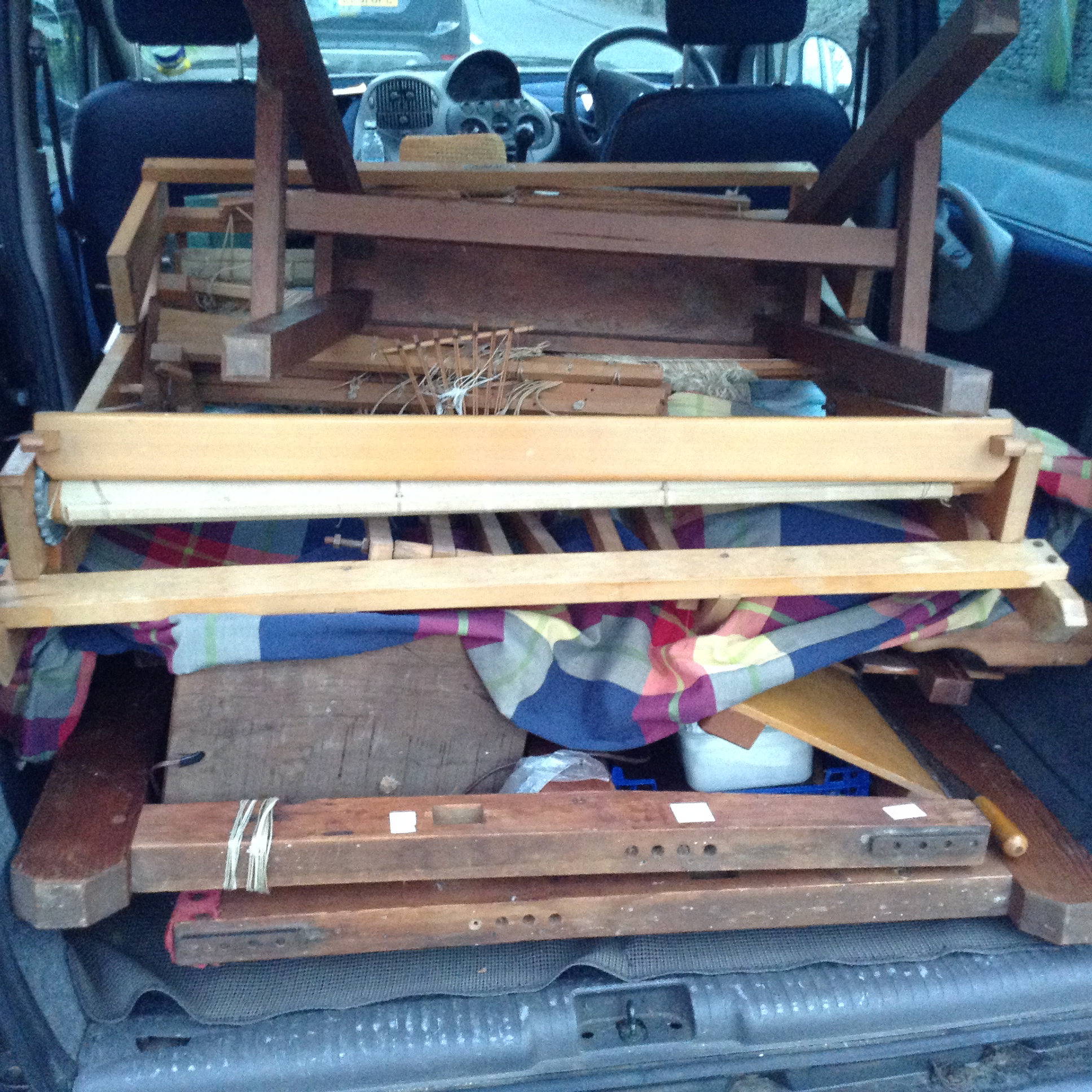
 rebecca connolly design